
How to Fix Sagging Gutters on a Garland TX Home

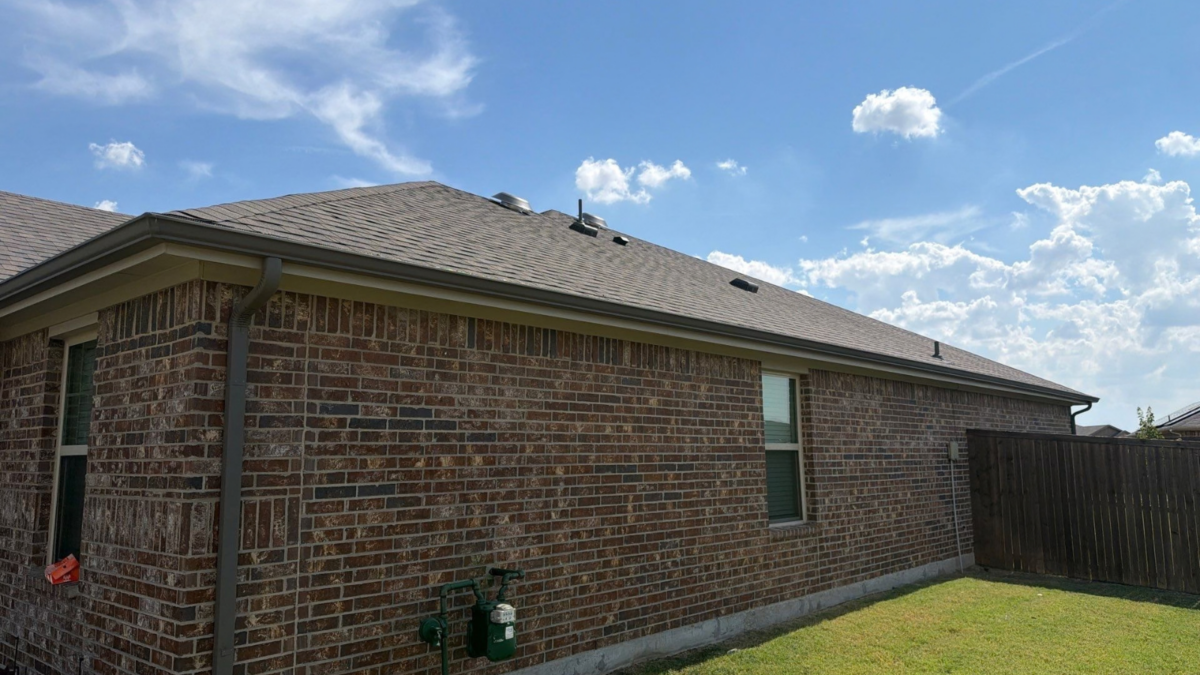
Sagging gutters are more than an appearance problem. When sections of a gutter pull away from the roofline or dip in the middle, rainwater may collect instead of flowing toward the downspouts. The added weight can damage fasteners, fascia boards, roof edges, and the gutter system itself. Overflowing water may also contribute to soil erosion, foundation concerns, stained siding, and damaged landscaping.
Why Gutters Begin to Sag
Gutters are designed to collect rainwater from the roof and direct it toward downspouts. They must remain firmly attached and slightly sloped for water to move correctly. When part of the system loses support, the gutter may bend, separate from the fascia, or hold standing water.
Common causes include:
- Loose or missing gutter fasteners
- Bent or damaged hangers
- Heavy leaves and debris
- Standing water
- Improper gutter slope
- Too much space between hangers
- Rotted fascia boards
- Storm or wind damage
- Ice or unusual weight
- Improper installation
- Gutters that are too small for the roof
- Damaged seams or corner joints
Before scheduling gutter repair Garland TX homeowners should inspect the complete drainage system. Repairing one loose section may not solve the problem if clogged downspouts or deteriorated fascia caused the sagging.
Look for Signs of Sagging Gutters
Some gutter problems are visible from the ground, especially after heavy rainfall. Homeowners may notice a section dipping below the roof edge or pulling away from the fascia.
Other warning signs include:
- Water remaining in the gutter after rain
- Overflow during ordinary rainfall
- Gaps between the gutter and fascia
- Loose screws, spikes, or hangers
- Water stains on the fascia or siding
- Erosion below the roofline
- Peeling paint near the gutters
- Leaking seams
- Downspouts receiving little water
- Plants growing inside the gutter
- Bent gutter sections
- Fasteners lying on the ground
Professional gutter repair Garland TX service may be necessary when the sag is extensive, the gutter is difficult to access, or the fascia shows signs of moisture damage.
Clean Out Leaves and Debris
Debris is one of the most common causes of gutter strain. Leaves, twigs, roofing granules, seed pods, and dirt can accumulate until water can no longer reach the downspout. Wet debris becomes heavy and places additional pressure on the gutter hangers.
Cleaning the gutter may relieve some of this weight, but homeowners should use caution. Ladders can be dangerous, especially on uneven soil, near electrical lines, or beside a steep roof. Never lean a ladder directly against a damaged gutter.
After debris is removed, flush the system carefully to determine whether water reaches the downspout. If water continues to collect in one area, the gutter may have an incorrect slope or a permanent bend.
Cleaning is an important first step, but gutter repair Garland TX homeowners can rely on may require additional corrections to the hangers, fasteners, fascia, or downspouts.
Inspect and Replace Damaged Hangers
Gutter hangers secure the system to the home. When they bend, loosen, corrode, or pull away from the fascia, the gutter may begin to sag.
A professional will typically inspect:
- The type of hanger
- Hanger spacing
- Fastener condition
- Fascia strength
- Gutter alignment
- Roof-edge condition
- Water flow toward the downspout
Loose hardware may sometimes be replaced with appropriate fasteners. However, new screws should not be installed into rotted or deteriorated wood because they will not hold securely.
For durable gutter repair Garland TX homeowners should make sure the replacement hardware is compatible with the gutter material and installed into a structurally sound surface. Adding excessive fasteners without correcting the underlying problem may damage the fascia without providing reliable support.
Correct the Gutter Slope
Gutters should not appear dramatically tilted, but they need a slight pitch toward the downspouts. If the slope is too flat, water may remain in the gutter. If it is too steep, water may move too quickly and overflow at corners or downspout openings.
A low spot often creates standing water that increases the weight on nearby hangers. Over time, the sag may become worse.
Correcting the pitch usually involves loosening or removing hangers, establishing the proper drainage line, and reinstalling the gutter at the correct angle. This work requires accurate measurements. Simply pushing the low section upward may create another low point elsewhere.
Professional gutter repair Garland TX service can help restore the correct slope while checking whether the gutter has already been permanently bent.
Examine the Fascia Board
The fascia is the board located behind the gutter along the roof edge. It provides an attachment surface for many gutter systems. When water repeatedly overflows or leaks behind the gutter, the fascia may absorb moisture and deteriorate.
Signs of fascia damage include:
- Soft or crumbling wood
- Peeling or bubbling paint
- Dark water stains
- Visible rot
- Loose gutter fasteners
- Gaps along the roof edge
- Insect activity
- Sections pulling away from the rafters
Damaged fascia must be addressed before the gutter can be secured correctly. Depending on the extent of the problem, part or all of the affected board may need replacement.
During gutter repair Garland TX contractors should also determine how water reached the fascia. Possible causes include failed gutter seams, missing flashing, roof-edge problems, overflow, or gutters that have pulled away from the structure.
Check the Downspouts for Blockages
A gutter may sag even when the visible channel looks relatively clean. Leaves and debris can become trapped inside the downspout or at an underground drainage connection.
A clogged downspout prevents water from leaving the gutter. The backed-up water adds weight and may overflow near the blockage.
Signs of a downspout problem include:
- Little or no water leaving the bottom
- Water overflowing near the downspout opening
- Leaks at downspout joints
- Gurgling sounds
- Water backing up during moderate rainfall
- Debris visible at an elbow
- Standing water near the gutter outlet
Effective gutter repair Garland TX homeowners schedule should include an inspection of the downspouts, elbows, outlets, and drainage extensions—not only the sagging section.
Repair or Replace Bent Gutter Sections
Minor alignment problems may sometimes be corrected by repositioning the gutter and installing suitable support. Severely bent, cracked, rusted, or distorted sections may require replacement.
Sectional gutters may allow the damaged portion to be removed and replaced, although matching the original profile and color can be difficult. Seamless systems often require a longer section to be remade so the repair does not create unnecessary joints.
Replacement may be the better choice when:
- The gutter will not hold its proper shape
- Several areas are sagging
- Seams repeatedly leak
- Corrosion has weakened the metal
- The fascia requires extensive repairs
- The system is incorrectly sized
- Water routinely overwhelms the gutters
- Compatible replacement parts are unavailable
A professional evaluation can determine whether localized gutter repair Garland TX service is practical or whether replacement will provide a more reliable result.
Consider North Texas Storm Conditions
Garland homes can experience heavy rain, strong winds, hail, and storm debris. These conditions may loosen fasteners, dent gutters, shift downspouts, and fill the system with leaves or roofing materials.
After severe weather, homeowners should look for:
- New dips or low points
- Gutters pulling away from the house
- Dents and cracks
- Loose downspouts
- Damaged fascia
- Overflow near roof valleys
- Granules accumulating in the gutter
- Missing or bent hangers
Roof valleys can deliver large amounts of water into one small gutter area. If overflow or sagging repeatedly occurs at the same location, the system may need improved drainage capacity or a different configuration.
Timely gutter repair Garland TX homeowners arrange after a storm may prevent a minor attachment problem from affecting the roof edge or exterior walls.
Avoid Common DIY Gutter Repair Mistakes
Sagging gutters may look easy to push back into position, but several common repair attempts can create additional problems.
Avoid:
- Working from an unstable ladder
- Leaning the ladder against the gutter
- Installing fasteners into rotten fascia
- Adding random screws without checking the slope
- Sealing over wet, dirty, or corroded surfaces
- Ignoring clogged downspouts
- Mixing incompatible metals or materials
- Walking on the roof without proper safety equipment
- Reusing damaged hangers
- Assuming every low section only needs tightening
Successful gutter repair Garland TX work should restore support, slope, drainage, and weather protection. A repair that improves appearance but leaves water standing in the system is incomplete.
How to Prevent Future Gutter Sagging
Routine maintenance can reduce the likelihood of another sagging section. Homeowners should inspect gutters several times each year and after major storms.
Helpful preventive steps include:
- Remove leaves and debris regularly.
- Keep downspouts and outlets clear.
- Trim branches away from the roof.
- Watch the gutters during rainfall.
- Repair leaking seams promptly.
- Maintain proper downspout extensions.
- Check for loose hangers.
- Address fascia damage early.
- Consider gutter guards where appropriate.
- Schedule a professional inspection when problems repeat.
Gutter guards may reduce certain types of debris, but they do not make a system maintenance-free. The guards, gutters, roof valleys, and downspouts still need periodic inspection.
Schedule Gutter Repair With Fetch Roofing
Sagging gutters can interfere with drainage and expose the roof edge, fascia, siding, landscaping, and foundation area to uncontrolled water. The correct solution depends on whether the problem involves debris, loose hangers, improper slope, damaged fascia, blocked downspouts, bent materials, or inadequate system capacity.
At Fetch Roofing in Mesquite, Texas, we help homeowners understand roofing and exterior drainage concerns throughout Garland and surrounding North Texas communities. When you need gutter repair Garland TX homeowners can begin with a professional evaluation of the gutter system, fascia, roof edge, downspouts, and drainage pattern.