(972) 749-9911

Hail Damage vs. Normal Wear: How Rowlett TX Homeowners Can Tell the Difference

After a hailstorm, it is natural to wonder whether your roof needs repairs. Dark spots, loose granules, and worn shingles can look concerning, but similar symptoms may have different causes. Some reflect aging, while others may indicate impact damage.

At Fetch Roofing in Mesquite, Texas, we help homeowners understand roof condition and evaluate repair needs. When investigating hail damage roof Rowlett TX homeowners should consider the pattern of damage, roofing history, and professional inspection findings together.

This guide focuses on asphalt shingles. Other roofing materials respond differently to hail and require material-specific assessment.

Understanding Hail Damage Roof Rowlett TX Concerns

Hail can strike shingles with enough force to displace granules, indent surfaces, or fracture the underlying material. The effects depend on the hailstones, roof condition, and circumstances of the storm.

Damage may appear as scattered impact locations rather than uniform deterioration. However, appearance alone does not provide a reliable diagnosis.

GAF’s technical guidance notes that hail can produce indentations or fractures and that some effects may not become immediately apparent.

For hail damage roof Rowlett TX evaluations, homeowners should avoid assuming every mark proves damage—or that a roof without obvious marks is necessarily unaffected.

What Normal Shingle Wear Can Look Like

Asphalt shingles experience sunlight, temperature changes, rain, and ordinary weathering throughout their service life.

Aging may involve fading, surface wear, granule loss, curling, or cracking. These conditions can develop gradually and may vary across roof sections.

Some deterioration also results from installation problems, foot traffic, or other causes rather than normal aging.

When assessing hail damage roof Rowlett TX homeowners should ask what evidence supports the proposed explanation.

A roof can have ordinary wear and storm damage at the same time. An inspection should evaluate both rather than force every observation into a single category.

Why Granule Loss Does Not Tell the Whole Story

Granules protect the asphalt surface, but finding them in gutters does not establish the cause of their release.

New shingles may shed loose manufacturing granules. Older shingles may lose granules through weathering, and hail can also dislodge them.

GAF explains that occasional granule loss can be normal, while extensive loss and bare areas may indicate an aging concern. 

For hail damage roof Rowlett TX inspections, granule loss should be evaluated alongside its distribution, surface condition, and other findings.

Do not scrape or brush shingles to investigate. Altering the surface can damage roofing and complicate later assessment.

Compare Scattered Impacts With Broader Deterioration

Hail impacts may create irregularly distributed marks. Gradual weathering may appear more widespread, although neither pattern is an absolute test.

Roof orientation, shade, material condition, and previous repairs can produce differences between sections.

A few photographs may not capture enough context to distinguish these possibilities.

During a hail damage roof Rowlett TX assessment, ask the inspector to explain the pattern across the roof. Are similar conditions present on several slopes? Are individual marks associated with material fractures or other impact evidence?

A useful explanation connects observations with the proposed cause rather than relying on one isolated dark spot.

Look for Supporting Evidence Around the Property

Damage to other exterior components can provide context. Accessible gutters, downspouts, window screens, and metal surfaces may show changes after hail.

Photographs taken before the storm can help distinguish new conditions from older dents or wear.

However, a dent in one component does not prove that shingles sustained functional damage. Materials respond differently to impacts.

For hail damage roof Rowlett TX documentation, record what you observe without assigning a cause you cannot confirm.

Missing shingles may also involve wind, while marks from branches or foot traffic may resemble other damage. A professional assessment should consider plausible alternatives.

Inspect Safely From the Ground

Homeowners can document visible changes without climbing onto the roof.

From a safe location, photograph roof sections, fallen debris, and accessible exterior damage. Indoors, note new stains or leaks.

Do not walk on shingles, lift tabs, or press suspected impact areas yourself. These actions can cause damage and introduce fall hazards.

When investigating hail damage roof Rowlett TX homeowners should also distinguish urgent symptoms from less immediate concerns.

Active water entry, a large roof opening, or a tree impact requires prompt attention. Arrange appropriate professional assistance and temporary protection rather than waiting for a complete diagnosis before limiting further damage.

Request a Clear Professional Assessment

A roof assessment should explain observed conditions, affected locations, and any limitations on the inspection.

Ask for photographs that show both close details and their position on the roof. Request a written explanation of recommended work.

For hail damage roof Rowlett TX inspections, useful questions include:

  • What findings suggest impact damage?
  • What appears related to aging or another cause?
  • Are additional tests or specialist opinions needed?
  • Is localized repair feasible?
  • What remains uncertain?

Avoid accepting an automatic replacement recommendation based solely on a neighborhood storm report. The proposed scope should reflect your property’s condition.

Understand the Insurance Distinction

Insurance coverage depends on your policy and the insurer’s assessment of the loss. A roofing contractor’s findings provide construction information; they do not guarantee a claim outcome.

Ask your insurer about covered causes, exclusions, deductibles, and settlement terms.

For hail damage roof Rowlett TX claims, keep photographs, inspection findings, maintenance records, and repair estimates together.

The Texas Department of Insurance also cautions that damage to part of a roof does not necessarily mean insurance will pay to replace the entire roof, even when replacement shingles do not match perfectly. 

Plan the Next Step With Fetch Roofing

The difference between hail damage and ordinary wear often requires more than a quick visual check. Patterns, material condition, prior records, and professional findings all matter.

Keep documentation accurate, address active leaks promptly, and request clear explanations before authorizing permanent work.

At Fetch Roofing in Mesquite, we help Rowlett homeowners understand roofing concerns and evaluate practical repair options. Contact us to discuss hail damage roof Rowlett TX assessment needs and obtain a written scope based on your roof’s observed condition.

How to Document Roof Storm Damage for an Insurance Claim in Garland TX

After a storm, missing shingles or a new ceiling stain can leave you wondering what to do first. Clear documentation helps you explain what happened, show the condition of your property, and organize information for your insurance company.

At Fetch Roofing in Mesquite, Texas, we help homeowners understand roofing concerns and necessary repairs. When documenting storm damage roof Garland TX homeowners should prioritize safety, accurate records, and timely communication.

Photographs and inspection findings support the claim review process, but they do not guarantee coverage. Your insurer evaluates the claim according to your policy and the circumstances of the damage.

Start Your Storm Damage Roof Garland TX Documentation Safely

Wait until severe weather has passed before walking around your property. Stay away from downed electrical lines, unstable trees, and damaged structures.

Do not climb onto the roof to obtain photographs. Wet surfaces, loose shingles, and concealed damage can make access hazardous.

Instead, document what you can see from safe ground-level locations. A roofing professional can assess areas that are difficult to observe.

For storm damage roof Garland TX documentation, your personal safety matters more than capturing every angle immediately. If the house appears structurally unsafe or water is reaching electrical equipment, seek appropriate emergency assistance before continuing.

Record the Timeline Accurately

Create a short written timeline while events are fresh in your memory. Include the approximate storm date, when you first noticed damage, and any changes afterward.

For example, record when a ceiling stain appeared or when you found shingles in the yard.

Distinguish observations from assumptions. “Water began dripping during Tuesday’s storm” is more precise than claiming a particular component failed without an inspection.

When organizing storm damage roof Garland TX records, identify dates you know and label estimates clearly.

Save relevant weather alerts if available, but remember that neighborhood storm reports do not establish damage to your individual roof.

Take Wide Views and Detail Photographs

Begin with broad photographs showing the house and affected areas. Then capture closer views where safely accessible.

Useful subjects may include:

  • Missing or displaced roofing materials.
  • Fallen branches and visible impact locations.
  • Damaged gutters, flashing, or vents.
  • Ceiling stains and affected interior finishes.
  • Personal property damaged by water.

For storm damage roof Garland TX claims, photograph the location as well as the visible symptom. A close-up alone may not show which part of the house is affected.

Keep original files and create labeled copies if needed. Avoid editing images in ways that change their appearance.

Make an Interior and Exterior Inventory

Photographs work best alongside a written list. Describe each affected area, its location, and when you noticed the problem.

For damaged belongings, include available information such as the item’s description, approximate age, and purchase records.

The Texas Department of Insurance recommends taking photographs or video, listing damage inside and outside the home, and checking with the insurer before discarding damaged items. 

A storm damage roof Garland TX inventory should remain factual. Do not describe every mark or worn surface as storm-related.

If something existed before the storm, note that history rather than leaving an inaccurate impression.

Document Temporary Protection and Expenses

An exposed opening or active leak may require temporary protection before permanent repairs can begin.

Arrange appropriate professional assistance for rooftop tarping or other work requiring elevated access. Photograph conditions before temporary work when safe, and retain invoices, receipts, and descriptions of the work performed.

For storm damage roof Garland TX records, keep temporary protection expenses separate from permanent repair estimates.

Texas Department of Insurance guidance advises homeowners to prevent further damage, save receipts, and avoid permanent repairs before the adjuster sees the damage. Contact your insurer promptly for instructions while arranging necessary protection.

Request a Professional Roof Assessment

A professional assessment can help identify affected components and explain the proposed repair scope.

Ask for photographs, specific locations, and a written description of observed conditions. The assessment should distinguish visible damage from areas needing further investigation.

During a storm damage roof Garland TX inspection, ask whether the findings involve shingles alone or also flashing, underlayment, decking, and related components.

A contractor’s estimate describes construction work. It does not establish coverage or guarantee that replacement is required.

Keep the assessment with your other records so you can share consistent information rather than relying on memory.

Gather Previous Roofing Records

Existing records provide context for the roof’s condition before the storm.

Collect available installation invoices, warranty documents, maintenance receipts, earlier inspection reports, and dated photographs.

These materials may clarify the roof’s age, previous repairs, or whether a visible condition existed earlier.

For storm damage roof Garland TX documentation, organize older records separately from post-storm findings.

If records are unavailable, say so. Do not guess at installation dates or describe the roof as recently replaced without supporting information.

Accurate background details help avoid conflicting statements during the review process.

Contact Your Insurer and Keep a Communication Log

Report suspected damage promptly and ask about policy requirements, documentation, and applicable deadlines.

Record the claim number, contact names, conversation dates, and requested next steps. Save submitted documents and confirmations.

When discussing storm damage roof Garland TX concerns, ask about your deductible, settlement terms, and inspection arrangements.

Keep communication clear and factual. If you do not know an answer, explain that further assessment is needed.

Texas prohibits a contractor from acting as a public insurance adjuster on a claim when also performing the associated work. Your roofer can document conditions and provide a repair estimate within the contractor’s role. 

Review Findings and Plan Repairs With Fetch Roofing

Keep your photographs, inventory, inspection report, estimates, and insurer correspondence together. If documents appear inconsistent, request clarification and identify the specific item involved.

A well-organized storm damage roof Garland TX file makes follow-up easier and helps you understand the proposed work.

At Fetch Roofing in Mesquite, we encourage Garland homeowners to seek clear explanations of roof condition and repair needs. Contact us to discuss an assessment and a written roofing scope so you can move forward with accurate information and a practical repair plan.

Mold and Rot on Siding: What Rowlett TX Homeowners Should Do

Mold, mildew, and wood rot can indicate that part of a home’s exterior is staying damp longer than it should. While surface growth may sometimes be a cleaning issue, soft or deteriorating siding can point to moisture reaching the material or the wall assembly behind it. Covering the discoloration without identifying the moisture source may allow the damage to continue.

At Fetch Roofing in Mesquite, Texas, we help North Texas homeowners evaluate roofing, siding, and exterior drainage concerns. When considering siding rot repair Rowlett TX homeowners should first determine where the moisture is coming from, how far the deterioration extends, and whether the underlying sheathing or framing has been affected.

Early evaluation can make the difference between replacing a few damaged boards and repairing a much larger section of the exterior.

Understand the Difference Between Mold and Rot

Mold is a type of fungal growth that develops when moisture and suitable organic material are present. It may appear as black, green, brown, gray, or white discoloration.

Rot is the deterioration of wood caused by certain fungi. As rot progresses, the material can lose strength, become soft, crack, crumble, or separate into fibers.

Mold may grow on surface dirt without significantly damaging the siding itself. Rot, however, means that wood or wood-based material has begun to deteriorate.

Before scheduling siding rot repair Rowlett TX homeowners should avoid assuming that every dark stain is rot. A professional inspection can help distinguish surface growth from structural deterioration.

Look for Warning Signs of Siding Rot

Rot is not always obvious from a distance. Paint or a thin outer surface may remain in place while the material underneath has weakened.

Warning signs include:

  • Soft siding
  • Swollen boards
  • Crumbling wood
  • Peeling or bubbling paint
  • Deep cracks
  • Open seams
  • Dark stains
  • Loose panels
  • Musty odors
  • Persistent mold growth
  • Rusted fasteners
  • Gaps around windows
  • Damage near the ground
  • Siding that breaks when lightly pressed
  • Interior water stains

Never push aggressively on damaged siding. Severely deteriorated material may break, and hidden insects or sharp fasteners may be present.

Professional siding rot repair Rowlett TX service may be necessary when damage extends across several boards or appears around windows, doors, rooflines, or structural transitions.

Find the Source of the Moisture

Rot cannot develop without moisture. Replacing damaged siding without correcting the water source may lead to another failure.

Common moisture sources include:

  • Leaking gutters
  • Clogged downspouts
  • Missing or damaged flashing
  • Roof leaks
  • Window or door leaks
  • Sprinkler overspray
  • Plumbing leaks
  • Siding installed too close to the ground
  • Missing clearances above roofs or decks
  • Failed caulk
  • Poor drainage
  • Condensation
  • Vegetation against the wall
  • Water trapped behind the siding

The visible damage may not be directly below the original leak. Water can travel behind siding or along framing before it reaches an area where staining or rot becomes noticeable.

A complete siding rot repair Rowlett TX inspection should evaluate the roof edge, gutters, windows, doors, penetrations, trim, and drainage around the affected wall.

Check the Gutters and Downspouts

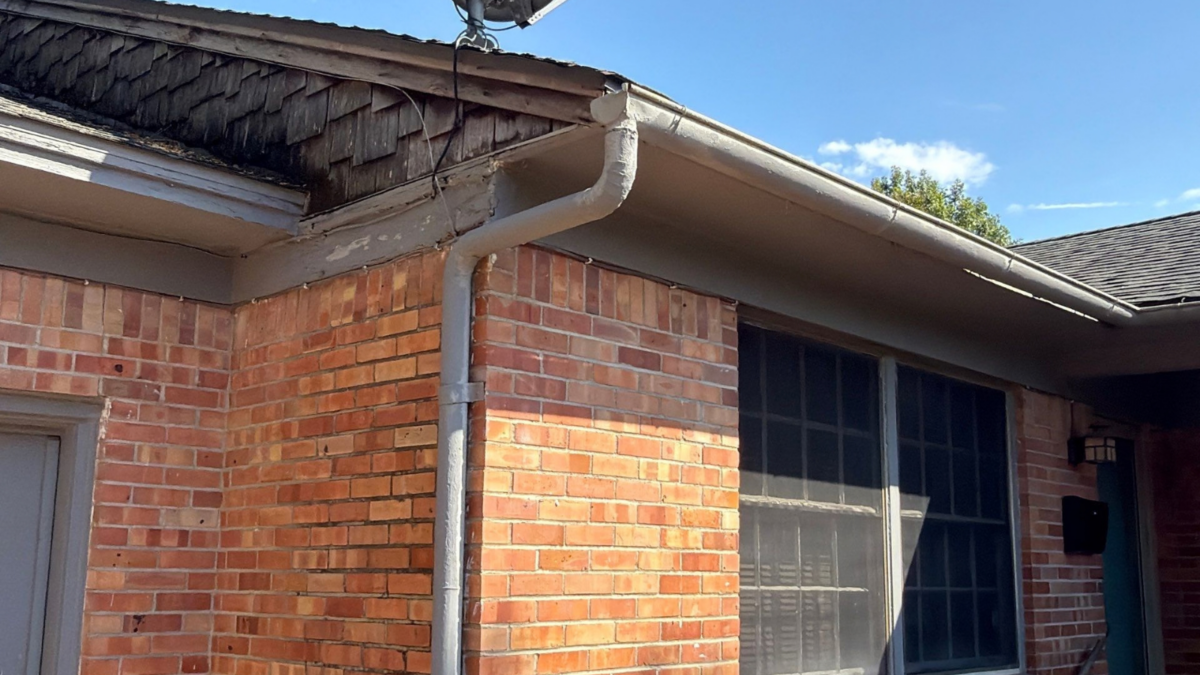
Gutters are intended to collect roof runoff and direct it away from the exterior. If a gutter overflows, leaks, sags, or pulls away from the fascia, water may repeatedly reach the siding below.

Look for:

  • Water stains below gutter seams
  • Overflow during rainfall
  • Clogged downspouts
  • Sagging gutter sections
  • Loose fasteners
  • Deteriorated fascia
  • Water collecting near the foundation
  • Downspouts discharging too close to the home

A siding repair may fail if an overhead gutter problem remains unresolved. Before completing siding rot repair Rowlett TX homeowners should make sure roof drainage is functioning correctly.

Inspect Windows and Doors

Window and door openings are common locations for moisture problems because several materials meet in a small area. Siding, trim, flashing, sealants, and the window or door frame must work together to direct water outward.

Signs of a problem include:

  • Rot below window corners
  • Peeling paint around trim
  • Failed caulk
  • Gaps above the opening
  • Interior wall stains
  • Swollen trim
  • Soft siding
  • Water marks beneath the sill
  • Loose or missing flashing

Caulk can help seal specific exterior joints, but it should not be used as a substitute for proper flashing. Applying more sealant over a poorly designed opening may trap water or conceal ongoing deterioration.

Examine Roof-to-Wall Connections

Siding near a roofline can deteriorate when it touches shingles or lacks adequate clearance. Snow, rain, leaves, and debris may collect in this area, keeping the siding wet.

Roof-to-wall intersections should include correctly installed step flashing and, where appropriate, kick-out flashing. Kick-out flashing helps direct water away from the wall and into the gutter.

Potential warning signs include:

  • Rot above or beside a roof
  • Staining below the roof edge
  • Siding touching shingles
  • Missing flashing
  • Repeated caulk repairs
  • Water stains inside the home
  • Damaged sheathing
  • Overflow behind the gutter

For siding rot repair Rowlett TX homes with damage near a roofline may require both siding and flashing corrections.

Determine the Type of Siding

Different siding materials respond to moisture in different ways. Identifying the material helps determine whether repair or replacement is appropriate.

Natural Wood Siding

Wood siding can absorb moisture when paint fails, edges are exposed, or clearances are insufficient. Localized boards may be replaceable if the surrounding material remains sound.

Engineered Wood Siding

Engineered wood products require protected edges, correct flashing, approved fasteners, and manufacturer-specified clearances. Swelling or edge deterioration may indicate prolonged moisture exposure.

Fiber Cement Siding

Fiber cement does not rot like wood, but it can crack, delaminate, or experience finish problems when installed incorrectly or exposed to persistent moisture. Wood sheathing behind it can still decay.

Vinyl Siding

Vinyl does not rot, but moisture can become trapped behind damaged or incorrectly installed panels. The weather-resistant barrier, sheathing, and framing may deteriorate even when the vinyl looks relatively intact.

Composite Siding

Composite products have different formulations and installation requirements. The manufacturer’s instructions should guide repairs.

Before beginning siding rot repair Rowlett TX homeowners should identify both the visible siding and the materials underneath it.

Carefully Clean Surface Mold

Surface mold or mildew may sometimes be removed without replacing the siding, provided the material remains structurally sound and the moisture source has been corrected.

Cleaning methods should follow the siding manufacturer’s recommendations. Using the wrong chemical or excessive pressure may damage the finish, force water behind the siding, or create discoloration.

Avoid:

  • Aggressive pressure washing
  • Mixing cleaning chemicals
  • Using abrasive tools
  • Working without protective equipment
  • Cleaning near electrical hazards
  • Covering active rot with paint
  • Allowing runoff to damage plants

Cleaning improves appearance, but it does not repair decayed material. If the siding is soft, swollen, crumbling, or structurally weakened, siding rot repair Rowlett TX service may require removal and replacement.

Remove Damaged Siding

When siding is rotted, the affected boards or panels generally need to be removed. The repair area should extend back to stable material so the new siding has a sound attachment surface.

The process may involve:

  1. Removing damaged siding and trim
  2. Inspecting the weather-resistant barrier
  3. Examining the sheathing
  4. Checking framing where accessible
  5. Locating the moisture source
  6. Repairing damaged wall materials
  7. Restoring flashing
  8. Installing compatible siding
  9. Sealing or finishing required surfaces
  10. Repainting or blending the repair

Simply attaching new siding over rotten material can conceal damage and leave the wall vulnerable.

Inspect the Sheathing and Framing

The most important conditions may be hidden behind the siding. Once damaged material is removed, the wall should be inspected for:

  • Soft sheathing
  • Dark staining
  • Fungal growth
  • Delamination
  • Rusted fasteners
  • Wet insulation
  • Insect activity
  • Damaged framing
  • Air gaps
  • Failed flashing
  • Missing weather-resistant barrier

If the sheathing or framing is affected, the repair becomes more extensive. These materials must be restored before the siding is replaced.

A thorough siding rot repair Rowlett TX project should address all deteriorated layers rather than stopping at the outer surface.

Repair the Moisture Source First

New siding should not be installed until the cause of the damage has been corrected. Depending on the problem, this may require:

  • Repairing gutters
  • Clearing downspouts
  • Installing proper flashing
  • Correcting roof leaks
  • Repairing window or door openings
  • Redirecting sprinklers
  • Improving ground drainage
  • Replacing failed trim
  • Correcting clearances
  • Repairing plumbing
  • Improving ventilation
  • Removing vegetation from the wall

The repaired area should be dry and stable before it is closed. Installing new materials over damp sheathing may trap moisture inside the wall.

Match the Replacement Siding

Matching existing siding can be difficult because materials fade and product lines change. A proper match should consider more than color.

Compare:

  • Material
  • Manufacturer
  • Profile
  • Width
  • Thickness
  • Texture
  • Exposure
  • Edge design
  • Fastening method
  • Color and finish

If an exact match is unavailable, homeowners may need to replace a larger section for a more consistent appearance. Another option may involve moving a matching piece from a less visible location and installing new material there.

Professional siding rot repair Rowlett TX contractors can explain whether a localized repair will blend reasonably with the existing exterior.

Do Not Paint Over Rot

Paint can temporarily hide staining, but it cannot restore the strength of decayed siding. Coating damaged material may also trap moisture and make it more difficult to monitor the problem.

Before painting, confirm that:

  • All rot has been removed.
  • The moisture source has been corrected.
  • The replacement material is dry.
  • Cut edges are protected.
  • The primer is compatible.
  • The finish matches the siding product.
  • Required cure times have been followed.

Paint is a protective finish, not a structural repair.

Watch for Insect Activity

Moist wood can attract or support certain insects. Rot and insect damage may occur in the same location, especially near the ground, decks, rooflines, and window openings.

Signs may include:

  • Small holes
  • Tunnels
  • Frass or sawdust-like material
  • Hollow-sounding wood
  • Insect wings
  • Damaged trim
  • Repeated deterioration

An appropriate pest professional may be needed when active infestation is suspected. Replacing siding without addressing insects could allow damage to continue.

Prevent Mold and Rot From Returning

Regular exterior maintenance can help reduce future moisture problems.

Homeowners should:

  • Keep gutters and downspouts clear.
  • Extend drainage away from the home.
  • Adjust sprinklers to avoid exterior walls.
  • Maintain window and door sealants.
  • Preserve roof-to-wall flashing.
  • Trim vegetation away from siding.
  • Keep siding above soil and mulch.
  • Repair peeling paint.
  • Inspect after major storms.
  • Address loose panels promptly.
  • Maintain ventilation where required.
  • Monitor recurring stains.

For lasting siding rot repair Rowlett TX homeowners should continue inspecting the repaired area after heavy rainfall.

When Localized Repair May Be Enough

A limited repair may be appropriate when:

  • Damage affects a small area.
  • The moisture source is clear.
  • The surrounding siding remains sound.
  • Sheathing damage is limited.
  • Matching material is available.
  • The wall can be dried properly.
  • There is no widespread insect activity.

Localized repairs can preserve more of the existing exterior while restoring protection to the damaged section.

When More Extensive Replacement May Be Needed

Replacing a larger section or complete elevation may be more practical when:

  • Rot affects several areas.
  • The siding has widespread deterioration.
  • Hidden damage extends beyond the visible section.
  • Matching products are unavailable.
  • Installation problems affect the entire wall.
  • Previous repairs have repeatedly failed.
  • The existing siding is near the end of its service life.
  • Major flashing improvements are necessary.

A written assessment should explain the condition of the visible siding and any underlying materials inspected.

Schedule Siding Rot Repair With Fetch Roofing

Mold and rot should not be handled as appearance problems alone. Discoloration may indicate persistent moisture, and soft siding can signal deterioration extending into the wall assembly.

At Fetch Roofing in Mesquite, Texas, we help homeowners throughout Rowlett and surrounding North Texas communities understand roofing, siding, gutter, and exterior drainage concerns. When you need siding rot repair Rowlett TX homeowners can begin with an inspection of the siding, trim, flashing, gutters, windows, doors, and affected wall areas.

Contact Fetch Roofing to schedule an exterior evaluation. We can help identify the moisture source, determine how far the damage extends, and explain the appropriate repair options for your Rowlett home.

How to Handle Cracked or Warped Siding on Your Garland TX Home

Cracked or warped siding can affect more than the appearance of your home. Siding is part of the exterior system that helps protect wall materials from wind, rain, sunlight, insects, and changing temperatures. When panels split, buckle, loosen, or pull away from the wall, moisture may reach areas that were previously protected.

At Fetch Roofing in Mesquite, Texas, we help North Texas homeowners understand exterior problems and make informed repair decisions. When considering siding repair Garland TX homeowners should determine why the siding became damaged before replacing individual panels. Heat exposure, improper installation, storm damage, moisture, and structural movement can create similar symptoms but require different solutions.

Addressing the underlying cause can reduce the risk of the repaired area failing again.

Recognize the Signs of Siding Damage

Some siding problems are immediately visible, while others begin as small changes that become more noticeable over time. Walk around the entire home and inspect each elevation from several angles.

Look for:

  • Cracked or split panels
  • Wavy siding
  • Buckled sections
  • Loose panels
  • Gaps at seams
  • Siding pulling away from trim
  • Melted or distorted areas
  • Faded or blistered finishes
  • Exposed fasteners
  • Water stains
  • Soft or swollen material
  • Missing siding
  • Damage around windows and doors

The appearance of the damage can provide clues about its cause. A single cracked panel may have experienced impact damage, while widespread waviness may indicate installation or heat-related problems.

Professional siding repair Garland TX service may be necessary when several elevations are affected or moisture damage is suspected beneath the siding.

Common Causes of Cracked Siding

Siding may crack because of impact, age, temperature changes, improper fastening, or material deterioration. Vinyl can become more brittle over time, especially after prolonged exposure to sunlight and changing temperatures. Fiber cement, engineered wood, metal, and other products can also crack or split under certain conditions.

Possible causes include:

  • Hail
  • Windblown debris
  • Lawn equipment
  • Tree branches
  • Improper installation
  • Fasteners placed incorrectly
  • Siding installed too tightly
  • Material aging
  • Foundation or wall movement
  • Water intrusion
  • Expansion and contraction

Before arranging siding repair Garland TX homeowners should check whether the cracks are isolated or follow a larger pattern. Repeated cracking along seams, corners, or fasteners may point to an installation issue rather than accidental impact.

Why Siding Becomes Warped

Warped siding may appear wavy, bowed, rippled, or pushed outward. The cause depends on the siding material and the location of the distortion.

Vinyl siding must be able to expand and contract as temperatures change. If panels are nailed too tightly or do not have enough clearance around trim, they may buckle during hot weather.

Other causes of warped siding include:

  • Excessive heat
  • Reflected sunlight from nearby windows
  • Moisture behind the siding
  • Rotted sheathing
  • Improper fastener placement
  • Uneven wall surfaces
  • Incorrect storage before installation
  • Inadequate expansion gaps
  • Structural movement
  • Poor-quality repairs

Effective siding repair Garland TX work should address the source of the distortion. Replacing a warped panel without correcting tight fastening or concentrated heat exposure may lead to another failure.

Check for Storm and Hail Damage

Garland homes can experience strong winds, hail, thunderstorms, and windblown debris. Storm damage may leave holes, cracks, dents, loose panels, or damaged trim.

After severe weather, inspect the exterior for:

  • Fresh cracks
  • Round impact marks
  • Chipped finishes
  • Loose siding
  • Missing sections
  • Damaged corner posts
  • Bent metal siding
  • Cracked window trim
  • Displaced soffit or fascia
  • Water entering around openings

Do not inspect high areas from an unstable ladder. A professional can examine siding that is difficult to access safely.

If storm damage may be involved, photograph visible conditions before temporary or permanent repairs begin. Documentation may help create a clear record of the property’s condition, although the insurance company determines whether damage is covered under a specific policy.

Timely siding repair Garland TX homeowners schedule after a storm may help prevent additional exposure of the wall beneath the damaged area.

Look for Moisture Behind the Siding

Cracked or warped siding may allow moisture to reach the weather-resistant barrier, sheathing, insulation, or framing. In other cases, moisture from an existing flashing or wall problem may cause the siding to warp from behind.

Warning signs include:

  • Soft areas
  • Swollen boards
  • Peeling paint
  • Mold or mildew
  • Musty odors
  • Interior wall stains
  • Damaged sheathing
  • Repeated caulk failure
  • Rusted fasteners
  • Water marks below windows

The source of moisture may be located above or beside the visible damage. Roof-to-wall connections, windows, doors, penetrations, gutters, and damaged flashing should all be considered.

A complete siding repair Garland TX evaluation should include the materials beneath the siding when evidence of moisture is present.

Identify the Existing Siding Material

Repair methods vary according to the siding material. Common exterior products include:

  • Vinyl siding
  • Fiber cement siding
  • Engineered wood siding
  • Natural wood siding
  • Steel or aluminum siding
  • Composite siding
  • Stucco systems
  • Brick or masonry veneer

Vinyl panels are typically removed and replaced differently from fiber cement boards. Wood may require cutting, sealing, priming, and painting. Metal siding can be difficult to reshape after severe bending, while composite products have manufacturer-specific requirements.

Before beginning siding repair Garland TX homeowners should identify the manufacturer, product line, color, profile, texture, and installation method whenever possible.

Repairing Cracked Vinyl Siding

A severely cracked vinyl panel typically requires replacement. Covering the crack with caulk may provide only a temporary cosmetic change and could interfere with the material’s movement.

Replacing a vinyl panel generally involves:

  1. Unlocking the affected panel
  2. Removing or releasing fasteners
  3. Inspecting the surface beneath it
  4. Cutting or selecting a compatible replacement
  5. Providing proper expansion clearance
  6. Fastening the panel correctly
  7. Reconnecting the siding courses
  8. Checking alignment

Vinyl should not be nailed so tightly that it cannot move. Fasteners are usually installed through designated slots and left with the clearance required by the manufacturer.

Correct siding repair Garland TX service should preserve both secure attachment and seasonal movement.

Repairing Warped Vinyl Siding

Warped vinyl may sometimes be repositioned if the material has not been permanently deformed. However, panels that have melted, stretched, or developed lasting waves generally require replacement.

The repair should determine whether the cause was:

  • Overdriven fasteners
  • Insufficient trim clearance
  • Incorrect overlap
  • Wall irregularities
  • Heat reflected from nearby glass
  • Grill or equipment heat
  • Missing insulation or sheathing repairs

If reflected sunlight caused the damage, installing another identical panel without managing the heat source may result in repeated warping.

Repairing Fiber Cement or Engineered Wood Siding

Cracked fiber cement boards commonly require replacement because patching may not restore their strength or appearance. New boards must be cut, fastened, flashed, and finished according to the manufacturer’s requirements.

Engineered wood siding may crack, swell, or deteriorate when cut edges, joints, or lower sections receive excessive moisture. Repairs may require:

  • Removing the damaged board
  • Inspecting the sheathing
  • Correcting the moisture source
  • Installing proper flashing
  • Sealing cut edges
  • Maintaining required clearances
  • Using approved fasteners
  • Applying compatible primer and paint

For these materials, siding repair Garland TX homeowners can rely on should follow product-specific instructions instead of using general methods intended for vinyl.

Repairing Wood Siding

Wood siding can often be repaired in sections, but the condition of the surrounding material must be evaluated. A cracked board caused by impact may need a straightforward replacement, while repeated splitting can indicate moisture movement or fastening problems.

Replacement wood should match the existing:

  • Species, when possible
  • Thickness
  • Width
  • Profile
  • Texture
  • Exposure
  • Finish

Cut edges and exposed surfaces should be protected as required. The repair must also maintain proper flashing and drainage.

Wood filler or caulk may be appropriate for certain small defects, but these materials should not be used to conceal significant decay or structural damage.

Matching Existing Siding

Finding a matching replacement panel can be challenging. Siding colors may fade, manufacturers may discontinue product lines, and similar-looking profiles may have different dimensions.

A good match considers:

  • Material
  • Manufacturer
  • Product line
  • Color name and code
  • Profile
  • Exposure
  • Texture
  • Thickness
  • Locking design
  • Age and fading

Sometimes a replacement panel can be taken from a less visible area of the home, with a new material installed in that location. This approach requires enough compatible siding and should not compromise another part of the exterior.

Professional siding repair Garland TX contractors can help determine whether a reasonable match is available or whether a larger section should be replaced for a more consistent appearance.

Avoid Common DIY Siding Repair Mistakes

Homeowners may be tempted to cover a crack or force a warped panel back into place. These approaches can create additional problems if the cause is not understood.

Avoid:

  • Nailing vinyl siding tightly
  • Sealing drainage openings
  • Caulking every visible joint
  • Installing incompatible materials
  • Ignoring damaged sheathing
  • Covering active moisture problems
  • Painting siding without checking compatibility
  • Reusing damaged fasteners
  • Leaving cut edges unfinished
  • Working near electrical service equipment
  • Using an unstable ladder
  • Replacing panels without allowing movement

Proper siding repair Garland TX work must preserve water drainage, ventilation, flashing, and material movement.

When a Localized Repair May Be Enough

A limited repair may be appropriate when:

  • Damage affects only one or two panels.
  • The surrounding siding remains secure.
  • No moisture damage is present.
  • The underlying wall is sound.
  • Matching material is available.
  • The original cause has been corrected.
  • The remaining siding has useful service life.

A localized repair can restore protection without replacing an entire elevation. However, homeowners should receive a clear explanation of any color or texture differences before work begins.

When Siding Replacement May Be More Practical

A broader replacement may be appropriate when:

  • Many panels are cracked or warped.
  • Damage affects multiple sides of the home.
  • The siding is brittle or deteriorated.
  • Moisture has damaged the wall assembly.
  • Replacement materials are unavailable.
  • Previous repairs have failed.
  • The original installation is incorrect.
  • The homeowner wants improved exterior performance.
  • The existing product is near the end of its service life.

Before deciding, compare the cost and expected lifespan of repeated repairs with the cost of replacing the affected section or complete siding system.

Prevent Future Siding Damage

Routine inspections can help homeowners identify minor problems before they spread.

Preventive steps include:

  • Inspecting siding after severe storms
  • Keeping grills and heat sources away from walls
  • Maintaining gutters and downspouts
  • Repairing window and door flashing
  • Trimming branches away from the house
  • Correcting sprinkler overspray
  • Maintaining paint and sealants
  • Watching for insect activity
  • Addressing loose panels promptly
  • Keeping required clearances above roofs and grade

Homeowners should also save spare siding and product information after a repair or replacement. Matching materials may be valuable if future storm or impact damage occurs.

Schedule Siding Repair With Fetch Roofing

Cracked or warped siding should not be treated as a cosmetic problem until the underlying cause has been identified. Impact damage, tight fasteners, excessive heat, moisture, improper installation, and structural movement can all affect siding performance.

At Fetch Roofing in Mesquite, Texas, we help homeowners throughout Garland and surrounding North Texas communities understand roofing, siding, and exterior concerns. When you need siding repair Garland TX homeowners can start with a professional evaluation of the damaged panels, wall surface, flashing, trim, and nearby exterior features.

Contact Fetch Roofing to schedule an inspection. We can identify the likely cause, explain available repair options, and help restore protection to your Garland home.

How to Fix Sagging Gutters on a Garland TX Home

Sagging gutters are more than an appearance problem. When sections of a gutter pull away from the roofline or dip in the middle, rainwater may collect instead of flowing toward the downspouts. The added weight can damage fasteners, fascia boards, roof edges, and the gutter system itself. Overflowing water may also contribute to soil erosion, foundation concerns, stained siding, and damaged landscaping.

At Fetch Roofing in Mesquite, Texas, we help North Texas homeowners evaluate roofing and drainage problems before they cause more extensive damage. When considering gutter repair Garland TX homeowners should identify why the gutter is sagging before attempting to reposition or replace it. Loose hardware, debris buildup, poor slope, damaged fascia, and undersized gutters can all produce similar symptoms but may require different repairs.

Why Gutters Begin to Sag

Gutters are designed to collect rainwater from the roof and direct it toward downspouts. They must remain firmly attached and slightly sloped for water to move correctly. When part of the system loses support, the gutter may bend, separate from the fascia, or hold standing water.

Common causes include:

  • Loose or missing gutter fasteners
  • Bent or damaged hangers
  • Heavy leaves and debris
  • Standing water
  • Improper gutter slope
  • Too much space between hangers
  • Rotted fascia boards
  • Storm or wind damage
  • Ice or unusual weight
  • Improper installation
  • Gutters that are too small for the roof
  • Damaged seams or corner joints

Before scheduling gutter repair Garland TX homeowners should inspect the complete drainage system. Repairing one loose section may not solve the problem if clogged downspouts or deteriorated fascia caused the sagging.

Look for Signs of Sagging Gutters

Some gutter problems are visible from the ground, especially after heavy rainfall. Homeowners may notice a section dipping below the roof edge or pulling away from the fascia.

Other warning signs include:

  • Water remaining in the gutter after rain
  • Overflow during ordinary rainfall
  • Gaps between the gutter and fascia
  • Loose screws, spikes, or hangers
  • Water stains on the fascia or siding
  • Erosion below the roofline
  • Peeling paint near the gutters
  • Leaking seams
  • Downspouts receiving little water
  • Plants growing inside the gutter
  • Bent gutter sections
  • Fasteners lying on the ground

Professional gutter repair Garland TX service may be necessary when the sag is extensive, the gutter is difficult to access, or the fascia shows signs of moisture damage.

Clean Out Leaves and Debris

Debris is one of the most common causes of gutter strain. Leaves, twigs, roofing granules, seed pods, and dirt can accumulate until water can no longer reach the downspout. Wet debris becomes heavy and places additional pressure on the gutter hangers.

Cleaning the gutter may relieve some of this weight, but homeowners should use caution. Ladders can be dangerous, especially on uneven soil, near electrical lines, or beside a steep roof. Never lean a ladder directly against a damaged gutter.

After debris is removed, flush the system carefully to determine whether water reaches the downspout. If water continues to collect in one area, the gutter may have an incorrect slope or a permanent bend.

Cleaning is an important first step, but gutter repair Garland TX homeowners can rely on may require additional corrections to the hangers, fasteners, fascia, or downspouts.

Inspect and Replace Damaged Hangers

Gutter hangers secure the system to the home. When they bend, loosen, corrode, or pull away from the fascia, the gutter may begin to sag.

A professional will typically inspect:

  • The type of hanger
  • Hanger spacing
  • Fastener condition
  • Fascia strength
  • Gutter alignment
  • Roof-edge condition
  • Water flow toward the downspout

Loose hardware may sometimes be replaced with appropriate fasteners. However, new screws should not be installed into rotted or deteriorated wood because they will not hold securely.

For durable gutter repair Garland TX homeowners should make sure the replacement hardware is compatible with the gutter material and installed into a structurally sound surface. Adding excessive fasteners without correcting the underlying problem may damage the fascia without providing reliable support.

Correct the Gutter Slope

Gutters should not appear dramatically tilted, but they need a slight pitch toward the downspouts. If the slope is too flat, water may remain in the gutter. If it is too steep, water may move too quickly and overflow at corners or downspout openings.

A low spot often creates standing water that increases the weight on nearby hangers. Over time, the sag may become worse.

Correcting the pitch usually involves loosening or removing hangers, establishing the proper drainage line, and reinstalling the gutter at the correct angle. This work requires accurate measurements. Simply pushing the low section upward may create another low point elsewhere.

Professional gutter repair Garland TX service can help restore the correct slope while checking whether the gutter has already been permanently bent.

Examine the Fascia Board

The fascia is the board located behind the gutter along the roof edge. It provides an attachment surface for many gutter systems. When water repeatedly overflows or leaks behind the gutter, the fascia may absorb moisture and deteriorate.

Signs of fascia damage include:

  • Soft or crumbling wood
  • Peeling or bubbling paint
  • Dark water stains
  • Visible rot
  • Loose gutter fasteners
  • Gaps along the roof edge
  • Insect activity
  • Sections pulling away from the rafters

Damaged fascia must be addressed before the gutter can be secured correctly. Depending on the extent of the problem, part or all of the affected board may need replacement.

During gutter repair Garland TX contractors should also determine how water reached the fascia. Possible causes include failed gutter seams, missing flashing, roof-edge problems, overflow, or gutters that have pulled away from the structure.

Check the Downspouts for Blockages

A gutter may sag even when the visible channel looks relatively clean. Leaves and debris can become trapped inside the downspout or at an underground drainage connection.

A clogged downspout prevents water from leaving the gutter. The backed-up water adds weight and may overflow near the blockage.

Signs of a downspout problem include:

  • Little or no water leaving the bottom
  • Water overflowing near the downspout opening
  • Leaks at downspout joints
  • Gurgling sounds
  • Water backing up during moderate rainfall
  • Debris visible at an elbow
  • Standing water near the gutter outlet

Effective gutter repair Garland TX homeowners schedule should include an inspection of the downspouts, elbows, outlets, and drainage extensions—not only the sagging section.

Repair or Replace Bent Gutter Sections

Minor alignment problems may sometimes be corrected by repositioning the gutter and installing suitable support. Severely bent, cracked, rusted, or distorted sections may require replacement.

Sectional gutters may allow the damaged portion to be removed and replaced, although matching the original profile and color can be difficult. Seamless systems often require a longer section to be remade so the repair does not create unnecessary joints.

Replacement may be the better choice when:

  • The gutter will not hold its proper shape
  • Several areas are sagging
  • Seams repeatedly leak
  • Corrosion has weakened the metal
  • The fascia requires extensive repairs
  • The system is incorrectly sized
  • Water routinely overwhelms the gutters
  • Compatible replacement parts are unavailable

A professional evaluation can determine whether localized gutter repair Garland TX service is practical or whether replacement will provide a more reliable result.

Consider North Texas Storm Conditions

Garland homes can experience heavy rain, strong winds, hail, and storm debris. These conditions may loosen fasteners, dent gutters, shift downspouts, and fill the system with leaves or roofing materials.

After severe weather, homeowners should look for:

  • New dips or low points
  • Gutters pulling away from the house
  • Dents and cracks
  • Loose downspouts
  • Damaged fascia
  • Overflow near roof valleys
  • Granules accumulating in the gutter
  • Missing or bent hangers

Roof valleys can deliver large amounts of water into one small gutter area. If overflow or sagging repeatedly occurs at the same location, the system may need improved drainage capacity or a different configuration.

Timely gutter repair Garland TX homeowners arrange after a storm may prevent a minor attachment problem from affecting the roof edge or exterior walls.

Avoid Common DIY Gutter Repair Mistakes

Sagging gutters may look easy to push back into position, but several common repair attempts can create additional problems.

Avoid:

  • Working from an unstable ladder
  • Leaning the ladder against the gutter
  • Installing fasteners into rotten fascia
  • Adding random screws without checking the slope
  • Sealing over wet, dirty, or corroded surfaces
  • Ignoring clogged downspouts
  • Mixing incompatible metals or materials
  • Walking on the roof without proper safety equipment
  • Reusing damaged hangers
  • Assuming every low section only needs tightening

Successful gutter repair Garland TX work should restore support, slope, drainage, and weather protection. A repair that improves appearance but leaves water standing in the system is incomplete.

How to Prevent Future Gutter Sagging

Routine maintenance can reduce the likelihood of another sagging section. Homeowners should inspect gutters several times each year and after major storms.

Helpful preventive steps include:

  • Remove leaves and debris regularly.
  • Keep downspouts and outlets clear.
  • Trim branches away from the roof.
  • Watch the gutters during rainfall.
  • Repair leaking seams promptly.
  • Maintain proper downspout extensions.
  • Check for loose hangers.
  • Address fascia damage early.
  • Consider gutter guards where appropriate.
  • Schedule a professional inspection when problems repeat.

Gutter guards may reduce certain types of debris, but they do not make a system maintenance-free. The guards, gutters, roof valleys, and downspouts still need periodic inspection.

Schedule Gutter Repair With Fetch Roofing

Sagging gutters can interfere with drainage and expose the roof edge, fascia, siding, landscaping, and foundation area to uncontrolled water. The correct solution depends on whether the problem involves debris, loose hangers, improper slope, damaged fascia, blocked downspouts, bent materials, or inadequate system capacity.

At Fetch Roofing in Mesquite, Texas, we help homeowners understand roofing and exterior drainage concerns throughout Garland and surrounding North Texas communities. When you need gutter repair Garland TX homeowners can begin with a professional evaluation of the gutter system, fascia, roof edge, downspouts, and drainage pattern.

Contact Fetch Roofing to schedule an inspection. We can identify the source of the sagging, explain the necessary repairs, and help restore dependable water flow away from your Garland home.

Leaking Gutter Seams: Repair Options for Homeowners in Rowlett TX

Leaking gutter seams can allow rainwater to run down your fascia, siding, windows, and exterior walls instead of flowing safely toward the downspouts. A small drip may initially seem harmless, but repeated water exposure can contribute to wood deterioration, soil erosion, foundation concerns, stained surfaces, and damaged landscaping.

At Fetch Roofing in Mesquite, Texas, we help homeowners understand how their roofing and gutter systems work together to protect their properties. When considering gutter repair Rowlett TX homeowners should determine why the seam is leaking before applying sealant or replacing gutter sections. The correct repair depends on the gutter material, joint condition, installation quality, drainage pattern, and extent of the damage.

Why Gutter Seams Begin to Leak

Sectional gutters are assembled from multiple pieces connected at joints. These joints are commonly found along straight runs, at corners, near end caps, and around downspout outlets. Sealant and connectors help prevent water from escaping, but these components can deteriorate over time.

Common causes of leaking gutter seams include:

  • Aging or cracked sealant
  • Loose gutter connectors
  • Corrosion around the joint
  • Separation caused by temperature changes
  • Improper installation
  • Standing water
  • Clogged gutters or downspouts
  • Sagging gutter sections
  • Storm or impact damage
  • Fasteners that have loosened
  • Misaligned gutter pieces
  • Excessive water from roof valleys

Before scheduling gutter repair Rowlett TX homeowners should have the entire gutter run inspected. A visible leak may be a symptom of another drainage issue rather than an isolated seam failure.

Signs That a Gutter Seam Is Failing

Some seam leaks are obvious during heavy rain, while others produce only a slow drip. Water stains or moisture damage may appear before the homeowner notices water leaving the joint.

Watch for:

  • Water dripping from a gutter connection
  • Dark stains beneath a seam
  • Peeling paint on the fascia
  • Soft or discolored wood
  • Rust around a joint
  • Gaps between gutter sections
  • Soil erosion below the seam
  • Water marks on siding
  • Moss or organic growth near the roof edge
  • Water collecting near the foundation
  • Loose corner pieces
  • Sealant peeling away from the gutter

Professional gutter repair Rowlett TX service may be necessary when the leak is difficult to reach, the gutter is pulling away from the home, or the surrounding fascia appears damaged.

Clean the Gutter Before Repairing the Seam

A gutter seam cannot be evaluated accurately when it is covered with leaves, dirt, roofing granules, or old sealant. The affected area should be cleaned and allowed to dry before repairs begin.

Cleaning also helps determine whether a blockage contributed to the leak. When water cannot reach the downspout, it may collect around a seam and expose weaknesses in the joint. Wet debris also adds weight, which can cause connected sections to shift or separate.

Homeowners should be cautious when using ladders. Avoid leaning a ladder against the gutter because the weight may bend the system or worsen the damaged seam. Steep rooflines, wet surfaces, uneven ground, and nearby electrical lines can make the work dangerous.

Cleaning may stop an overflow problem, but gutter repair Rowlett TX homeowners can depend on often requires resealing, realignment, hardware replacement, or installation of a new section.

Option One: Reseal the Gutter Joint

If the gutter pieces remain structurally sound and properly aligned, removing the failed sealant and resealing the joint may correct the leak.

The general process includes:

  1. Removing loose debris and old sealant
  2. Cleaning the joint thoroughly
  3. Drying the repair area
  4. Checking for cracks, holes, or corrosion
  5. Realigning the connected pieces
  6. Applying compatible gutter sealant
  7. Allowing the sealant to cure
  8. Testing the joint with water

Sealant should be designed for the gutter material and outdoor exposure. Applying new sealant directly over dirt, moisture, rust, or deteriorated material may provide only a temporary result.

For successful gutter repair Rowlett TX contractors should also confirm that water does not remain around the joint. Even a properly sealed seam may fail again if the gutter slope creates standing water.

Option Two: Tighten or Replace the Joint Connector

Sectional gutter systems may use connectors, brackets, screws, rivets, or specialized joiners to hold pieces together. If the hardware becomes loose or damaged, the seam can separate.

The repair may involve:

  • Tightening suitable fasteners
  • Replacing corroded screws
  • Installing new rivets
  • Replacing a damaged connector
  • Repositioning nearby hangers
  • Realigning the adjoining gutter pieces
  • Applying new sealant after the joint is secured

Fasteners should not be tightened excessively because this may distort thin gutter material or damage the connector. If the joint continues to move, additional support may be needed.

A complete gutter repair Rowlett TX evaluation should examine the hangers on both sides of the leaking seam. If the gutter is poorly supported, repairing the connector alone may not prevent the joint from reopening.

Option Three: Correct Sagging or Improper Slope

Standing water frequently contributes to seam failure. Gutters should have a slight slope toward the downspouts. When a section sags or tilts in the wrong direction, water may collect around the nearest joint.

The weight of standing water can place additional stress on:

  • Seams
  • Hangers
  • Fasteners
  • Fascia boards
  • Corners
  • End caps
  • Downspout outlets

Correcting the slope generally requires repositioning the gutter and its supports. The repair should create consistent drainage without producing an excessive angle.

When arranging gutter repair Rowlett TX homeowners should ask whether the contractor will test the complete gutter run. Fixing the seam without correcting the low point may allow the leak to return.

Option Four: Repair Small Holes or Corrosion

Metal gutters may develop small holes around seams, fasteners, or areas where water regularly collects. Minor damage may sometimes be patched if the surrounding material remains strong.

A patch must overlap sound gutter material and be sealed appropriately. However, patching heavily rusted or weakened metal is unlikely to provide a dependable long-term repair.

Signs that patching may not be appropriate include:

  • Widespread corrosion
  • Multiple nearby holes
  • Thin or brittle metal
  • Cracks extending from the joint
  • Significant deformation
  • Repeated failure of previous patches
  • Damage affecting a long gutter section

Professional gutter repair Rowlett TX service can help determine whether a localized patch is reasonable or replacement would be more practical.

Option Five: Replace the Damaged Gutter Section

A severely damaged seam may require removal and replacement of the affected gutter section. This option may be appropriate when the material is bent, cracked, corroded, or unable to hold sealant.

Sectional gutters may allow a limited portion to be replaced. However, the new piece must match the existing gutter’s size, profile, material, and configuration. Color matching can be difficult if the original finish has faded.

With seamless gutters, the replacement may involve a longer continuous section. Although seamless systems have joints at corners and downspouts, they eliminate many of the connections found along straight runs.

Replacement may be recommended when:

  • Several seams are leaking
  • The gutters are near the end of their service life
  • The system has widespread corrosion
  • Multiple sections are sagging
  • Previous repairs have failed
  • The gutters are too small for the roof
  • The existing profile is badly damaged
  • Water repeatedly overflows during normal rainfall

Reliable gutter repair Rowlett TX homeowners choose should address the system’s overall condition rather than repeatedly patching components that are failing throughout the property.

Check Corners and End Caps

Inside corners, outside corners, and end caps are frequent leak locations because they contain joints and receive significant water flow.

A corner below a roof valley may handle a particularly large amount of runoff. During a North Texas storm, water may reach that area faster than the gutter or downspout can drain it.

If a corner repeatedly leaks, the problem may involve:

  • Failed sealant
  • Loose hardware
  • Poor alignment
  • An undersized gutter
  • An insufficient downspout
  • Debris near the outlet
  • Excessive runoff from a roof valley
  • Incorrect gutter slope

In these situations, gutter repair Rowlett TX professionals should evaluate both the leaking joint and the amount of water entering that location.

Inspect the Fascia and Roof Edge

Water escaping through a seam can travel behind the gutter and soak the fascia board. If the fascia becomes soft or rotten, gutter fasteners may loosen and the system may pull away from the home.

An inspection should look for:

  • Soft or deteriorated wood
  • Peeling paint
  • Dark staining
  • Loose fasteners
  • Gaps behind the gutter
  • Damaged roof-edge materials
  • Missing or ineffective flashing
  • Water marks on the soffit

Damaged fascia may need to be repaired before the gutter can be secured correctly. Installing new screws into deteriorated wood will not provide dependable support.

Thorough gutter repair Rowlett TX service should identify how the moisture reached the fascia so the underlying source is corrected.

Prevent Future Gutter Seam Leaks

Regular maintenance can reduce stress on seams and help homeowners discover problems early.

Homeowners should:

  • Remove leaves and debris regularly.
  • Keep downspouts clear.
  • Inspect seams after severe storms.
  • Watch the gutters while it is raining.
  • Correct sagging sections promptly.
  • Trim nearby tree branches.
  • Check for loose hangers.
  • Maintain proper downspout extensions.
  • Repair fascia damage.
  • Schedule professional inspections when leaks return.

Gutter guards may reduce debris accumulation, but they do not eliminate maintenance. The gutters, guards, seams, roof valleys, and downspouts still require periodic inspection.

Schedule Gutter Repair With Fetch Roofing

Leaking gutter seams should not be ignored. Escaping water may affect the fascia, soffit, siding, landscaping, and areas near the foundation. Depending on the condition of the system, the correct solution may include resealing the joint, replacing connectors, adjusting the slope, repairing small holes, or installing a new gutter section.

At Fetch Roofing in Mesquite, Texas, we help homeowners throughout Rowlett and surrounding North Texas communities understand roofing and drainage concerns. When you need gutter repair Rowlett TX homeowners can start with a professional inspection of the leaking seam, gutter supports, fascia, downspouts, and overall water flow.

Contact Fetch Roofing to schedule an evaluation. We can identify the source of the leak, explain the available repair options, and help restore dependable drainage around your Rowlett home.

Wind Damage Roof Repair: What Wylie TX Homeowners Need to Know

Strong winds can leave your roof with obvious damage, such as missing shingles or fallen branches. They can also create less noticeable problems that allow rainwater to enter your home later. Understanding what to look for after a storm helps you respond before a manageable repair becomes a larger project.

At Fetch Roofing in Mesquite, Texas, we help homeowners understand roofing concerns and make informed repair decisions. When considering wind damage roof repair Wylie TX homeowners should start with a professional assessment, clear documentation, and a written explanation of the necessary work.

Here is what you need to know about identifying damage, protecting your property, and planning repairs.

How Strong Winds Affect Your Roof

Wind does not apply equal pressure across your roof. Edges, corners, and ridges can experience uplift that loosens roofing materials. Once a shingle lifts, additional wind may crease, tear, or remove it.

Damage can also affect ridge caps, flashing, roof vents, and other components. Flying debris may puncture roofing materials or damage gutters.

For wind damage roof repair Wylie TX homeowners should consider the entire roofing system. Replacing a missing shingle alone may leave another damaged component unaddressed.

The roof’s age, installation quality, material condition, and existing weaknesses can influence how it performs during a storm.

Signs You May Need Wind Damage Roof Repair Wylie TX

Some warning signs are visible from the ground. Walk around your property only after conditions are safe, and look for changes in the roof’s appearance.

Common signs include:

  • Missing shingles or exposed sections of roofing.
  • Shingles that appear lifted, folded, or uneven.
  • Roofing pieces scattered across the yard.
  • Displaced ridge caps or damaged roof vents.
  • Bent flashing or loose roof-edge materials.
  • New ceiling stains or water entering the attic.

These observations justify further investigation, but they do not establish the full repair scope. A roof may have concealed damage even when most shingles remain in place.

Put Safety Before Inspection

Avoid climbing onto the roof after a storm. Wet surfaces, loose materials, and damaged decking can make access hazardous.

Stay away from downed power lines and report them to the appropriate utility or emergency service. The National Weather Service advises avoiding fallen electrical lines and remaining alert to hazards after high winds.

When arranging wind damage roof repair Wylie TX homeowners can photograph visible damage from a safe location.

If a large tree has struck the house, the roof appears unstable, or water is reaching electrical equipment, prioritize immediate safety assistance. Do not enter areas that may be structurally compromised.

Take Steps to Limit Further Damage

An exposed roof can allow additional rainwater into insulation, ceilings, and interior finishes. Temporary protection may be necessary while permanent repairs are arranged.

A qualified professional can assess whether tarping or another temporary measure is appropriate. Homeowners should avoid attempting rooftop protection themselves.

Inside the house, move belongings away from leaks when safe and collect dripping water without approaching electrical hazards.

For wind damage roof repair Wylie TX homeowners should keep receipts for temporary protective work. Photograph damage before repairs when possible, but do not delay necessary protection solely to preserve photographs.

Temporary measures require follow-up; they do not restore the roof permanently.

Document Damage and Contact Your Insurer

Record the approximate storm date, when you noticed damage, and any resulting leaks. Take photographs of affected areas and retain inspection reports, estimates, invoices, and communication.

If you believe the damage may be covered, contact your insurer promptly and ask about reporting deadlines and required documentation. The Texas Department of Insurance recommends photographing storm damage and keeping records of temporary repairs. 

Insurance coverage for wind damage roof repair Wylie TX homeowners request depends on the policy and claim assessment.

Ask about your wind and hail deductible, settlement terms, and any depreciation. A roofing estimate describes proposed construction work; it does not guarantee insurance payment.

Decide Whether Repair or Replacement Makes Sense

Not every wind-damaged roof needs replacement. Localized damage may be repairable when surrounding materials remain sound and the affected components can be restored correctly.

Replacement may deserve consideration when damage is widespread, shingles are too brittle to repair reliably, or multiple roofing components have deteriorated.

During wind damage roof repair Wylie TX assessments, ask the contractor to explain the recommendation using photographs and specific findings.

Appearance also matters. Replacement shingles may differ from older materials because of fading or product availability. Discuss likely color differences before work begins.

The decision should reflect the roof’s actual condition rather than a blanket recommendation based on storm exposure.

Understand What a Proper Repair Includes

A durable repair addresses damaged materials and the conditions beneath them. Depending on the findings, work may include shingles, underlayment, flashing, fasteners, vents, or roof decking.

For wind damage roof repair Wylie TX homeowners should request a written scope identifying the affected areas, proposed materials, and installation approach.

Ask how concealed damage will be handled if discovered during construction. The agreement should explain how additional work is documented and approved.

Repairs should follow applicable manufacturer instructions and local requirements. Surface sealant alone may not resolve torn shingles, damaged flashing, or compromised materials underneath.

Choose Your Roofing Contractor Carefully

After a storm, take time to verify a contractor’s business identity, insurance information, references, and written terms.

Compare estimates based on the work included. A low price may omit items necessary to complete the repair.

When choosing wind damage roof repair Wylie TX homeowners should avoid pressure to sign immediately or promises of guaranteed insurance approval.

Texas prohibits contractors from offering to waive, rebate, or absorb a property insurance deductible. Texas also prohibits a contractor from acting as a public insurance adjuster on a claim when performing the work associated with that claim. 

Protect Your Roof After Repairs

Once repairs are complete, keep photographs, invoices, and warranty information together. Review any maintenance recommendations and inspect your property from the ground after future storms.

Address loose components promptly, keep gutters clear, and have hazardous branches evaluated by a qualified tree professional. Maintenance cannot eliminate storm damage, but it can help identify weaknesses before another severe weather event.

At Fetch Roofing in Mesquite, we encourage homeowners to seek clear answers about their roof’s condition. Contact us to discuss wind damage roof repair Wylie TX homeowners may need and plan the next steps toward restoring your home’s protection.

How to Finance a Roof Replacement in Sachse TX

A roof replacement is a major investment, and deciding how to pay for it deserves careful planning. Whether your roof has reached the end of its service life or sustained storm damage, understanding your options can help you protect your home without creating unnecessary financial pressure.

At Fetch Roofing in Mesquite, Texas, we encourage homeowners to start with a clear understanding of the work their property needs. When comparing roof replacement financing Sachse TX homeowners should consider the project cost, monthly payment, repayment period, and total borrowing expense together.

This guide explains how to evaluate financing options and prepare for a roof replacement with greater confidence.

Start With a Detailed Roofing Estimate

Before exploring roof replacement financing Sachse TX homeowners need a written estimate that clearly describes the proposed work. Financing an incomplete estimate can leave you scrambling to cover unexpected expenses.

Your estimate should address roofing materials, removal of existing shingles, disposal, underlayment, flashing, ventilation, and installation. Ask how the contractor handles damaged roof decking discovered after the old roofing comes off.

Compare estimates based on their scope rather than price alone. A lower quote may exclude work another contractor includes.

Understanding the project also helps you decide how much to borrow. If you can cover part of the replacement with savings, you may only need financing for the remaining balance.

Decide How Much Savings You Can Use

Using savings can reduce interest costs and lower the amount you need to finance. However, paying for the entire replacement should not automatically mean emptying your emergency fund.

Consider upcoming household expenses, income stability, and other repairs your home may need. Keeping money available for unexpected events can be especially valuable during a construction project.

For roof replacement financing Sachse TX homeowners may choose to combine a cash contribution with a loan. This approach can reduce the monthly payment while preserving some financial flexibility.

Avoid stretching your budget so tightly that a routine expense becomes difficult to manage after installation.

Compare Personal and Home Improvement Loans

An unsecured personal loan may provide funds for a roof replacement without using your home as collateral. Some lenders market similar products specifically as home improvement loans.

Available rates, loan amounts, fees, and repayment terms depend on the lender and your qualifications. Approval is not guaranteed.

When evaluating roof replacement financing Sachse TX homeowners should compare the annual percentage rate, or APR, alongside the monthly payment. Also review origination fees, the amount you will actually receive, and any prepayment penalties.

A longer repayment period may lower the monthly payment but increase the overall interest expense. Ask whether checking your rate involves a soft or hard credit inquiry before submitting applications.

Understand Home Equity Loans and HELOCs

Homeowners with sufficient equity may consider a home equity loan or home equity line of credit, commonly called a HELOC.

A home equity loan generally provides a lump sum. A HELOC allows you to borrow against an approved credit line during a specified draw period. These products use your home as collateral, meaning missed payments can put the property at risk. HELOCs also commonly have variable interest rates.

For roof replacement financing Sachse TX homeowners should carefully assess that risk rather than focusing only on an attractive initial payment.

Ask about closing costs, appraisal requirements, funding timelines, and repayment changes. These details matter if your roof needs attention before a lender can complete its approval process.

Ask About Contractor-Arranged Financing

Some roofing contractors can connect customers with third-party financing providers. Availability, terms, and approval requirements vary.

When discussing roof replacement financing Sachse TX homeowners should ask whether financing is available for their project and which company provides the loan. Do not assume the roofing contractor is also the lender.

Review the construction contract and financing agreement separately. Confirm the project price, payment schedule, loan amount, APR, and any fees before signing.

You can also compare a contractor-arranged offer with financing obtained directly through a bank, credit union, or other lender. Convenience is useful, but the repayment terms still need to fit your household budget.

Read Promotional Financing Terms Carefully

Promotional offers can sound appealing, particularly when they advertise low payments or an interest-free period. However, different promotions can work very differently.

A true introductory zero-percent APR offer differs from deferred-interest financing. With deferred interest, failing to pay the promotional balance in full by the deadline can result in interest charges dating back to the purchase. Minimum payments may not clear the balance before that deadline.

Before choosing promotional roof replacement financing Sachse TX homeowners should calculate the payment required to finish within the promotional period.

Ask what happens when the promotion ends, whether fees apply, and how payments are allocated. Get those answers in writing.

Review Insurance When Storm Damage Is Involved

Insurance may help pay for roof replacement when damage results from an event covered by your policy. Coverage depends on the policy, the cause of damage, and the insurer’s assessment. Aging or ordinary wear does not automatically qualify for payment.

Before arranging roof replacement financing Sachse TX homeowners with possible storm damage should review their coverage and understand their potential out-of-pocket responsibility.

Ask your insurer about the deductible, depreciation, payment timing, and documentation requirements.

Texas law prohibits contractors from waiving an insurance deductible or helping a policyholder avoid paying it through rebates, credits, or similar arrangements. Be cautious of offers promising to eliminate that obligation. 

Compare the Full Cost Before Signing

The most affordable-looking monthly payment does not always represent the lowest-cost financing option.

For roof replacement financing Sachse TX homeowners should compare:

  • The amount borrowed and any upfront contribution.
  • APR and whether the interest rate can change.
  • Monthly payment and repayment length.
  • Fees and the total amount repaid.
  • Promotional deadlines and late-payment consequences.

Check whether the payment fits your budget alongside utilities, insurance, mortgage payments, and other obligations. Leave room for ordinary increases in household expenses.

Also confirm when funds become available and how contractor payments will be handled. Your financing schedule should align with the written project agreement.

Plan Your Roof Replacement With Fetch Roofing

A sound financing decision starts with understanding your roof’s condition and the work required to address it. Material selection, installation details, and a clear project scope all affect the amount you need to budget.

At Fetch Roofing in Mesquite, Texas, we encourage Sachse homeowners to ask questions, review estimates carefully, and compare financing terms before committing.

When evaluating roof replacement financing Sachse TX homeowners can use a detailed roofing estimate as the foundation for those conversations. Contact Fetch Roofing to discuss your roof replacement needs, then review available payment options with the appropriate financing provider.

How Storm Damage Affects Your Gutters in Balch Springs TX

North Texas storms can bring heavy rain, strong winds, hail, and flying debris. While homeowners often check their shingles after severe weather, gutters can also sustain significant damage. Bent sections, loose fasteners, clogged downspouts, and separated joints may prevent the system from directing water safely away from the home.

At Fetch Roofing, we help homeowners throughout Balch Springs, Mesquite, and surrounding North Texas communities inspect and address exterior damage after severe weather. Scheduling storm gutter repair Balch Springs TX homeowners can trust helps identify problems that may otherwise lead to roof-edge damage, soil erosion, foundation concerns, and water intrusion.

Understanding how storms affect your gutters can help you recognize damage early and determine when professional attention is necessary.

Why Gutters Are Vulnerable During North Texas Storms

Gutters are installed along the edges of the roof, leaving them exposed to wind, hail, branches, and large amounts of rainwater. Even a properly installed system can be damaged when severe weather places more stress on it than it was designed to handle.

Storm-related gutter problems may develop suddenly or become noticeable several weeks later. A small dent might restrict water flow, while a loosened fastener can gradually allow a section to pull away from the fascia.

An inspection for storm gutter repair Balch Springs TX properties should examine the gutters, downspouts, seams, fasteners, fascia, and drainage areas around the home.

Hail Can Dent and Crack Gutters

Hailstones can strike gutters with enough force to create dents, cracks, and chipped finishes. Aluminum gutters are especially vulnerable to visible denting, although other materials can also sustain damage.

Small dents may appear cosmetic, but deeper damage can interfere with water flow. Cracked finishes expose the underlying material and may increase the risk of corrosion. Hail can also damage gutter guards, loosen connections, or create openings around seams.

Homeowners should avoid climbing a ladder immediately after a storm. A professional providing storm gutter repair Balch Springs TX services can inspect difficult-to-reach areas safely and determine whether damaged sections can be repaired or should be replaced.

Strong Winds Can Pull Gutters Away From the Home

High winds can place pressure on gutters, especially when debris has accumulated inside them. Wind may also lift gutter guards, loosen end caps, or pull downspouts away from exterior walls.

If fasteners become loose, the gutter may separate from the fascia board. This creates a gap where rainwater can run behind the gutter and reach the wood along the roofline.

Signs of wind damage include:

  • Gutters hanging unevenly
  • Loose brackets or fasteners
  • Gaps between the gutter and fascia
  • Missing gutter guards
  • Disconnected downspouts
  • Sections of gutter lying on the ground
  • Water stains along the roof edge

Prompt storm gutter repair Balch Springs TX homeowners arrange can prevent loose components from becoming more severely damaged during the next storm.

Falling Branches Can Crush Gutter Sections

Trees provide shade and curb appeal, but overhanging branches can become hazardous during severe weather. Large branches may bend, crush, puncture, or completely detach sections of the gutter system.

Even smaller twigs can collect inside gutters and block downspout openings. When combined with leaves and roofing granules, this debris may form a dense clog that prevents proper drainage.

After a storm, inspect the ground and roofline from a safe location. If branches are resting on the roof or gutters, contact qualified professionals for removal and inspection. Do not pull heavy debris from the roof yourself.

Professional storm gutter repair Balch Springs TX service may involve replacing crushed sections, resealing joints, correcting gutter alignment, and checking the fascia for hidden damage.

Heavy Rain Can Expose Drainage Problems

Heavy rainfall may reveal gutter problems that were not obvious during dry weather. Water spilling over the edges could indicate clogs, poor slope, undersized gutters, damaged seams, or insufficient downspout capacity.

Overflowing water may collect around the foundation, wash away landscaping, and stain siding or masonry. It can also enter behind the gutters and damage fascia or soffit materials.

Storm gutter repair Balch Springs TX homeowners request after heavy rain should include more than removing visible debris. The entire system should be evaluated to determine why water is not flowing correctly.

In some cases, the solution may involve cleaning the gutters. Other properties may need realignment, additional downspouts, new gutter sections, or improved water discharge at ground level.

Clogged Downspouts Can Cause Water to Back Up

Storms can fill gutters with leaves, twigs, seed pods, and roofing debris. This material often moves toward the downspouts, where it may become trapped inside narrow openings or elbows.

When a downspout is blocked, water backs up into the gutter. The additional weight may cause the gutter to sag or pull away from the house. Standing water can also contribute to corrosion, leaks, and insect activity.

Common signs of a clogged downspout include:

  • Little or no water exiting during rainfall
  • Water spilling over the gutter near the downspout
  • Dripping from joints or seams
  • Sagging near the outlet
  • Debris visible at the top opening
  • Water collecting beside the foundation

A storm gutter repair Balch Springs TX inspection can locate the blockage and determine whether the downspout or connecting hardware has also been damaged.

Storms Can Damage Gutter Seams and End Caps

Sectional gutter systems have joints that may separate or leak after exposure to strong winds, hail, and rapid temperature changes. End caps can also loosen, allowing water to escape from the ends of the gutters.

Leaks often become visible as streaks on the exterior wall or persistent dripping during rainfall. Water may also damage landscaping directly below the leaking area.

Applying sealant over the outside of a dirty or damaged seam may provide only temporary results. The area should be cleaned, inspected, and repaired with materials compatible with the gutter system.

A professional handling storm gutter repair Balch Springs TX projects can determine whether a leaking seam can be resealed or whether the affected section should be replaced.

Roof Damage Can Create Gutter Problems

Roof and gutter damage frequently occur together. Hail may loosen roofing granules, while wind can lift shingles or damage flashing. Displaced roofing materials may fall into the gutters and restrict drainage.

Water may also appear behind the gutter even when the gutter itself is not damaged. The actual cause could be deteriorated drip edge, damaged roof decking, loose flashing, or improper roof-to-gutter alignment.

For this reason, storm gutter repair Balch Springs TX homeowners schedule should include an evaluation of the nearby roof edge. Repairing only the gutter may not solve the problem if damaged roofing components continue directing water incorrectly.

Signs You Need Storm Gutter Repair in Balch Springs TX

Some damage is easy to see, but other problems require closer inspection. Contact a professional if you notice:

  • Dented or cracked gutter sections
  • Gutters pulling away from the fascia
  • Water overflowing during rain
  • Loose or missing fasteners
  • Leaks around corners and seams
  • Disconnected downspouts
  • Standing water inside the gutters
  • Damaged or missing gutter guards
  • Eroded soil beneath the roofline
  • Water collecting near the foundation
  • Stained siding or masonry
  • Rotted fascia or soffit materials

Do not wait for visible interior water damage before requesting storm gutter repair Balch Springs TX service. Exterior drainage problems can gradually affect several parts of the home.

Repairing Versus Replacing Storm-Damaged Gutters

Not every damaged gutter system requires complete replacement. Isolated dents, loose fasteners, minor seam leaks, and disconnected downspouts may be repairable if the rest of the system remains in good condition.

Replacement may be more appropriate when gutters are extensively crushed, corroded, incorrectly sized, repeatedly separating, or damaged across multiple sections. Older gutters with recurring leaks may also be less cost-effective to repair.

The decision should consider:

  • The extent of the storm damage
  • Age and condition of the gutters
  • Number of affected sections
  • Condition of the fascia
  • Quality of the existing installation
  • Drainage capacity
  • Repair and replacement costs
  • Likelihood of recurring problems

A detailed storm gutter repair Balch Springs TX assessment can help homeowners compare their options without making assumptions based only on visible damage.

What to Do After a Severe Storm

Once it is safe to go outside, inspect your property from ground level. Take photographs of visible dents, detached components, fallen branches, and water accumulation. Avoid touching loose metal or climbing onto the roof.

Move valuable outdoor items away from overflowing areas if this can be done safely. Do not attempt temporary repairs during lightning, strong winds, or heavy rain.

If you suspect insured damage, review your policy and contact your insurance provider to understand the claim process. A roofing contractor can document visible conditions, but the insurance company determines coverage under the policy.

Arrange storm gutter repair Balch Springs TX service promptly so damaged drainage components do not remain exposed through additional rainfall.

How to Reduce Future Gutter Damage

No gutter system can be made completely storm-proof, but preventive maintenance may reduce the risk of avoidable damage.

Homeowners can:

  • Clean gutters and downspouts regularly.
  • Trim weak or overhanging branches.
  • Repair loose fasteners before storm season.
  • Replace deteriorated gutter sections.
  • Inspect seams and end caps for leaks.
  • Confirm that downspouts discharge away from the home.
  • Consider suitable gutter guards.
  • Schedule roof and gutter inspections after severe weather.
  • Keep ground-level drainage areas clear.

A well-maintained system is better prepared to carry heavy rainfall than one already weakened by clogs, corrosion, or loose hardware.

Schedule Gutter Service With Fetch Roofing

Storm-damaged gutters can affect more than the appearance of your home. When the system cannot control roof runoff, water may reach the fascia, siding, landscaping, soil, and foundation area.

Fetch Roofing provides professional roofing and gutter services for homeowners throughout Balch Springs, Mesquite, and nearby North Texas communities. Our team can inspect storm-related damage, explain the condition of your drainage system, and recommend appropriate repairs or replacement options.

For dependable storm gutter repair Balch Springs TX homeowners can turn to Fetch Roofing. Prompt professional attention can restore proper water flow, limit additional exterior damage, and help prepare your home for the next North Texas storm.

How Gutter Guards Protect Your Foundation in Sunnyvale TX

Your roof directs a large amount of rainwater toward the edges of your home. Gutters are designed to collect that water and carry it through downspouts to a safe drainage area. When leaves, twigs, roofing granules, and other debris clog the system, water may overflow and collect beside the foundation.

At Fetch Roofing, we help homeowners throughout Sunnyvale, Mesquite, and surrounding North Texas communities protect their homes with dependable roofing and exterior drainage solutions. Installing gutter guards Sunnyvale TX homeowners can rely on may help keep gutters flowing, reduce overflow, and direct rainwater away from the foundation.

Gutter guards cannot correct every drainage or foundation problem. However, when they are properly selected, installed, and maintained, they can support a complete water-management strategy for your property.

Why Foundation Drainage Matters in North Texas

North Texas soil can expand when it absorbs water and shrink as it dries. Significant or uneven changes in soil moisture may place stress on a home’s foundation. Water repeatedly collecting in one area can create different soil conditions around the property.

Gutters and downspouts help manage roof runoff before it reaches the ground. A clogged system may allow water to spill directly beside the house, saturate landscaping, wash away soil, or form puddles near the foundation.

By helping gutters remain open, gutter guards Sunnyvale TX properties need can support more consistent drainage during rainfall. They do not stabilize the soil themselves, but they can reduce one common source of concentrated water near the home.

How Clogged Gutters Can Affect Your Foundation

A roof collects rainwater across its entire surface. During a North Texas storm, that water can move quickly into the gutter system. If the gutters are blocked, the water has nowhere to go.

Overflow may fall close to the foundation rather than reaching the downspout. Over time, this can contribute to several problems:

  • Soil erosion around the home
  • Puddles near exterior walls
  • Oversaturated flower beds
  • Water entering crawl spaces or low areas
  • Stains on siding and masonry
  • Damage to fascia and soffit materials
  • Uneven moisture conditions around the foundation

Installing gutter guards Sunnyvale TX homeowners can maintain may reduce the amount of large debris entering the gutter channels. This helps preserve a clear path for rainwater to reach the downspouts.

How Gutter Guards Sunnyvale TX Homes Use Help Control Runoff

Gutter guards cover or protect the open portion of a gutter while allowing rainwater to enter. Depending on the product, they may block leaves, twigs, seed pods, pine needles, insects, and other materials.

A properly functioning system helps protect the foundation in several ways.

They Reduce Gutter Blockages

Leaves and other debris can create dams inside the gutters. Water then backs up and spills over the front or rear edge of the system.

Quality gutter guards Sunnyvale TX homeowners select can reduce the amount of debris that accumulates inside the gutters. With fewer obstructions, rainwater is more likely to continue toward the downspouts.

They Support Proper Downspout Flow

Gutters are only part of the drainage system. Water must also pass through the downspouts and exit far enough from the home.

Debris that enters an unprotected gutter may eventually block the downspout opening or become trapped inside an elbow. Gutter guards help limit the material entering these vulnerable areas.

Downspout extensions, splash blocks, or underground drainage may still be needed to move the discharged water away from the foundation. The correct solution depends on the property’s grading and drainage design.

They Help Reduce Soil Erosion

Overflowing gutters can create a steady stream of water along the roofline. This concentrated flow may displace mulch, damage plants, and wash soil away from the foundation.

Installing gutter guards Sunnyvale TX properties can benefit from helps keep more water inside the drainage system. Controlled discharge is generally better for the surrounding soil than repeated overflow in random locations.

They Promote More Consistent Drainage

Foundation protection depends partly on managing water consistently around the property. A gutter system that works during one storm but overflows during the next may create unpredictable moisture patterns.

Gutter guards do not control every source of water, but they can help the roof drainage system perform more consistently. Homeowners should combine them with properly sized gutters, adequate downspouts, suitable discharge locations, and positive grading away from the house.

Signs Your Gutters Are Not Protecting the Foundation

Homeowners do not always realize that their gutters are clogged until visible damage develops. Inspect your property from the ground during or shortly after rainfall and look for the following warning signs:

  • Water spilling over gutter edges
  • Plants or weeds growing in the gutters
  • Sagging or separated gutter sections
  • Water stains beneath the roofline
  • Puddles beside the foundation
  • Eroded soil or displaced mulch
  • Downspouts releasing little or no water
  • Damp areas near exterior walls
  • Peeling paint or deteriorated fascia
  • Cracks or gaps in gutter seams

These symptoms may indicate that the gutters need cleaning, repair, realignment, or replacement. An inspection can also determine whether gutter guards Sunnyvale TX homeowners are considering would improve the existing system.

Choosing the Right Type of Gutter Guard

Not every gutter guard performs the same way. The best choice depends on the roof design, gutter size, surrounding trees, rainfall patterns, and maintenance expectations.

Common options include:

Screen Gutter Guards

Screen guards use openings to block larger leaves and debris. They are often affordable, but smaller particles may still enter the gutters. Screens may require periodic cleaning if debris collects on top.

Micro-Mesh Gutter Guards

Micro-mesh products use very small openings to filter leaves, shingle granules, insects, and finer debris. They may provide more complete protection but should be installed correctly so water can enter during heavy rain.

Surface-Tension Guards

Surface-tension or reverse-curve systems guide water around a curved edge while allowing debris to fall away. Their performance depends heavily on the roof slope, gutter position, and installation quality.

Brush and Foam Inserts

Brush and foam products sit inside the gutter channel. They may block larger materials but can collect small debris over time. Homeowners should understand their cleaning and replacement requirements.

A professional evaluation can help identify gutter guards Sunnyvale TX homes need based on actual roof and property conditions rather than a one-size-fits-all recommendation.

Gutter Guards Do Not Eliminate Maintenance

One of the most common misconceptions is that gutter guards make gutters completely maintenance-free. While they can reduce the amount of debris entering the system, leaves and organic material may still collect on top of the guards or around roof valleys.

Small particles can also pass through certain products. Downspouts, seams, fasteners, and drainage outlets should still be inspected periodically.

Maintenance for gutter guards Sunnyvale TX homeowners install may include:

  • Removing debris from the guard surface
  • Checking for loose or damaged sections
  • Inspecting gutters after severe storms
  • Confirming that downspouts are flowing
  • Cleaning roof valleys above the gutters
  • Looking for leaks at seams and corners
  • Checking that water exits away from the foundation
  • Inspecting fascia for moisture damage

Regular maintenance helps the gutter guards and the rest of the drainage system continue working together.

Why Professional Installation Matters

Gutter guards must be compatible with the existing gutters and roofing system. Improper attachment may damage shingles, create gaps, restrict water flow, or affect the gutter’s position.

Professional installers can evaluate gutter slope, fasteners, seams, downspout placement, and overall condition before installing guards. If the gutters are already sagging, leaking, undersized, or improperly pitched, those problems should be corrected first.

Professional installation of gutter guards Sunnyvale TX homeowners choose also helps ensure the product is securely fitted around corners, valleys, and other complicated roof areas.

Additional Ways to Protect Your Foundation

Gutter guards are one part of a broader drainage plan. Homeowners should also consider the following measures:

  • Keep gutters and downspouts in good condition.
  • Extend downspouts away from the home.
  • Maintain soil grading that directs water outward.
  • Correct low areas where water collects.
  • Monitor irrigation near the foundation.
  • Repair plumbing leaks promptly.
  • Keep drainage paths clear.
  • Inspect the roof and gutter system after major storms.

If you notice foundation cracks, sticking doors, uneven floors, or other signs of movement, consult an appropriate foundation professional. Gutter improvements may help manage future runoff, but they cannot repair existing structural damage.

Schedule Gutter Guard Service With Fetch Roofing

Protecting your foundation begins with controlling where roof runoff travels. Clogged gutters may send water over the roofline and allow it to collect beside the house. Gutter guards can reduce blockages and help water move through gutters, downspouts, and properly planned discharge areas.

Fetch Roofing provides roofing and gutter solutions for homeowners in Sunnyvale, Mesquite, and surrounding North Texas communities. Our team can inspect your existing system, identify drainage concerns, and explain which gutter guard options may be suitable for your home.

For professional gutter guards Sunnyvale TX homeowners can depend on, contact Fetch Roofing to schedule an inspection. A properly maintained gutter system can help control runoff, reduce soil erosion, and provide an additional layer of protection for your home’s foundation.